As a supplier of outrunner brushless motors, I’ve witnessed firsthand the diverse operating conditions these motors encounter. One particular aspect that often raises concerns among our customers is the performance of outrunner brushless motors at low temperatures. In this blog post, I’ll delve into the scientific details of how low temperatures affect these motors, drawing from both theoretical knowledge and practical experience. Outrunner Brushless Motor
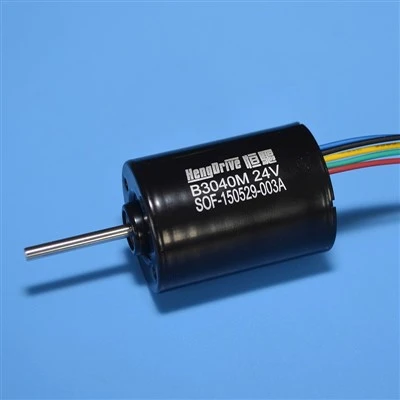
Understanding the Basics of Outrunner Brushless Motors
Before we explore the impact of low temperatures, let’s briefly review the fundamental principles of outrunner brushless motors. Unlike traditional brushed motors, which use brushes to transfer electrical current to the rotating armature, brushless motors rely on electronic commutation. In an outrunner brushless motor, the outer shell (the rotor) contains the permanent magnets, while the stationary inner part (the stator) holds the coils of wire. When an electrical current is applied to the stator coils, a magnetic field is created, which interacts with the permanent magnets in the rotor, causing it to rotate.
This design offers several advantages, including higher efficiency, longer lifespan, and better power-to-weight ratio. However, like all electrical devices, outrunner brushless motors are sensitive to environmental conditions, and temperature is one of the most critical factors.
Effects of Low Temperatures on Motor Performance
1. Increased Resistance
One of the primary effects of low temperatures on outrunner brushless motors is an increase in the electrical resistance of the stator coils. According to Ohm’s law (V = IR, where V is voltage, I is current, and R is resistance), when the resistance increases, the current flowing through the coils decreases for a given voltage. This reduction in current can lead to a decrease in the magnetic field strength generated by the coils, resulting in lower torque output.
In practical terms, a motor that normally provides sufficient torque to drive a specific load at room temperature may struggle to do so at low temperatures. For example, in a drone application, the motors may not be able to generate enough lift to keep the aircraft airborne, or in a robotic vehicle, the motors may cause the vehicle to move more slowly or with less power.
2. Reduced Lubrication Efficiency
The bearings in outrunner brushless motors require proper lubrication to operate smoothly. At low temperatures, the viscosity of the lubricant increases significantly. Higher viscosity means that the lubricant becomes thicker and less able to flow freely, which can impede the rotation of the bearings.
This increased friction in the bearings not only reduces the overall efficiency of the motor but also generates additional heat. Over time, the excessive heat can damage the bearings and other components of the motor, shortening its lifespan. Moreover, the increased friction can also cause vibrations and noise, which are undesirable in many applications.
3. Altered Magnet Properties
Permanent magnets are a crucial component of outrunner brushless motors. At low temperatures, the magnetic properties of these magnets can change. Some types of magnets may experience a decrease in their magnetic strength, known as demagnetization. Even though the demagnetization effect is usually reversible to some extent when the temperature returns to normal, it can still have a significant impact on motor performance during the low-temperature operation.
A decrease in magnetic strength reduces the interaction between the magnetic field of the rotor and the stator coils, leading to a decrease in torque and power output. In high-performance applications where precise control and high power are required, such as in racing drones or industrial automation systems, this reduction in performance can be a major drawback.
4. Battery Performance Degradation
In most practical applications, outrunner brushless motors are powered by batteries. Low temperatures also have a profound effect on battery performance. Lithium-ion batteries, which are commonly used to power these motors, experience a decrease in their capacity and discharge rate at low temperatures.
As the battery’s capacity decreases, it can supply less electrical energy to the motor, resulting in reduced operating time. Additionally, the lower discharge rate means that the battery may not be able to provide the high current required by the motor during high-power operations, such as acceleration or climbing. This can further limit the performance of the motor and the overall system.
Practical Considerations for Low-Temperature Operation
Based on our experience as a motor supplier, we have some practical recommendations for customers who need to operate outrunner brushless motors at low temperatures.
1. Motor Selection
When choosing an outrunner brushless motor for low-temperature applications, it’s essential to consider the motor’s specifications and design. Look for motors that are designed to operate over a wide temperature range and have been tested at low temperatures. Some manufacturers may offer motors with special insulation materials or design features that help to mitigate the effects of low temperatures.
2. Battery Management
Proper battery management is crucial for maintaining motor performance at low temperatures. Use batteries that are specifically designed for low-temperature operation and ensure that they are fully charged before use. Additionally, consider using battery heaters to keep the batteries at an optimal temperature during operation. This can help to maintain the battery’s capacity and discharge rate, ensuring that the motor receives sufficient power.
3. Preheating
In some cases, preheating the motor and the battery can be an effective way to improve performance at low temperatures. This can be done by using external heating devices or by allowing the motor to run at a low power for a short period before full operation. Preheating helps to reduce the viscosity of the lubricant in the bearings and increase the electrical conductivity of the stator coils, improving overall motor efficiency.
4. Monitoring and Maintenance
Regular monitoring of the motor’s performance and temperature is essential during low-temperature operation. Use temperature sensors to keep track of the motor’s temperature and ensure that it does not exceed the recommended operating range. Additionally, perform regular maintenance on the motor, including checking the bearings for proper lubrication and inspecting the stator coils for any signs of damage.
Conclusion

In conclusion, low temperatures have a significant impact on the performance of outrunner brushless motors. The increased resistance, reduced lubrication efficiency, altered magnet properties, and battery performance degradation can all lead to decreased torque, power output, and overall efficiency. However, by understanding these effects and taking appropriate measures, such as proper motor selection, battery management, preheating, and monitoring, it is possible to mitigate the negative impacts and ensure reliable operation of the motors at low temperatures.
Automotive Brushless Motor As a supplier of outrunner brushless motors, we are committed to providing our customers with high-quality products and technical support. If you have any questions or need further information about the performance of our motors at low temperatures, or if you are interested in purchasing our motors for your specific application, please feel free to contact us. We look forward to discussing your requirements and finding the best solutions for your needs.
References
- Chapman, S. J. (2012). Electric Machinery Fundamentals. McGraw-Hill.
- Fitzgerald, A. E., Kingsley Jr, C., & Umans, S. D. (2003). Electric Machinery. McGraw-Hill.
- Linden, D., & Reddy, T. B. (2002). Handbook of Batteries. McGraw-Hill.
Shenzhen HengDrive Technologies Co., Ltd.
Shenzhen HengDrive Technologies Co., Ltd. is one of the most professional outrunner brushless motor manufacturers and suppliers in China, specialized in providing high quality customized service. We warmly welcome you to buy the newest outrunner brushless motor in stock here from our factory.
Address: Building A & F, FuNing Hi-Tech Park, XinTian Road, FuHai Street, BaoAn District, ShenZhen, GuangDong Province, China.
E-mail: Marketing001@hengdrive.com
WebSite: https://www.hengdrivemotor.com/
