If you’ve ever stood inside a power substation at dusk, watching the soft hum of equipment that keeps homes lit, factories running, and offices powered, you’ve probably wondered: how does that electricity get from a grid tower to the outlets we use every day? For anyone in the market for power transformers—whether you’re building a new industrial facility, upgrading a municipal grid, or managing a remote mine—choosing between single-phase and three-phase units is one of the first, and most critical, decisions you’ll make. As a power transformer supplier with 12 years of working directly with engineers, project managers, and maintenance teams, I’ve seen firsthand how the wrong choice here can lead to overspending, downtime, or even safety risks. Let’s break down the real differences between these two types of transformers, not just the textbook definitions, but the practical, on-the-ground details that matter for your project. Power Transformer
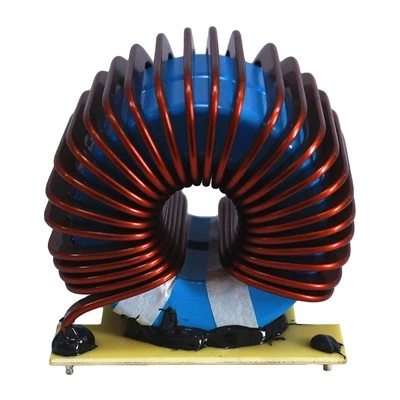
First, let’s start with the basics: what a transformer does, at its core. Every transformer steps voltage up or down to match what equipment needs. High-voltage power from transmission lines is useless for homes, which run on 120V or 240V, so step-down transformers lower that voltage. But single-phase and three-phase transformers don’t just change voltage—they work with different electrical supply systems, and that’s where most confusion starts.
Single-phase power is the type you get in residential neighborhoods, right? It’s two wires (plus a ground) that deliver one alternating current (AC) waveform. Think of it like a single swing on a playground: it goes back and forth once every cycle, 60 times a second in North America, 50 times in most of Europe. That works for a house, where you’re running a fridge, a TV, a few lights—low-power, small loads. But take a factory with 100 CNC machines, a conveyor belt, and a welding robot, and single-phase power falls flat. Why? Because single-phase power has a gap between cycles. For a split second, the voltage drops to zero. For small loads, that’s no big deal, but for heavy industrial equipment, that zero-voltage gap causes inefficiency, increased heat in motors, and even premature wear. That’s where three-phase power comes in. It’s three separate AC waveforms, each offset by 120 degrees, so there’s never a gap. At any moment, at least two phases are delivering power, so the supply is smooth. For a machine running 24/7, that consistency is everything.
Now, let’s talk about how these transformers are built, because that’s where the cost and size differences hit you. A single-phase transformer has two main components: a primary winding and a secondary winding, wrapped around a single core. The core is usually laminated steel to reduce energy loss, and the whole unit is smaller and lighter because it only handles one current path. A 10kVA single-phase transformer for a residential neighborhood might fit on a utility pole, right? Three-phase transformers, though, have three sets of windings—one for each phase—either wrapped around a single three-limb core or three separate single-phase cores bolted together. That makes them bigger, heavier, and more complex to manufacture. A 10kVA three-phase transformer, for comparison, would be too large for a utility pole; it’s meant for mounting in a substation or a factory’s electrical room.
Wait, but what about capacity? A lot of people ask: can I get a three-phase transformer that does the same work as three single-phase ones? Technically, yes, but it’s not a 1:1 swap. Let’s do the math. A 10kVA single-phase transformer handles 10,000 volt-amperes (VA) of power. Three of those would total 30kVA. A 30kVA three-phase transformer delivers the same total power, but it’s 15-20% smaller and lighter than three separate single-phase units. That’s a big deal for space, especially in tight industrial facilities where every square foot costs money. I’ve had a customer last year who was fitting out a new manufacturing plant in the Midwest; they initially planned to use three single-phase transformers to power their assembly line, but switching to a three-phase unit saved them 8 feet of space in their electrical room—enough to add a new workbench that generated an extra $120,000 in annual revenue. That’s the kind of practical benefit you don’t see in a spec sheet.
Next up: efficiency and energy loss. This is where three-phase transformers have a clear edge, but it’s not always the one you’d expect. Let’s go back to that zero-voltage gap in single-phase systems. Motors running on single-phase power have to use extra components—like start capacitors—to keep running through that gap. Those components add friction, generate heat, and waste energy. A study from the Department of Energy found that industrial motors running on single-phase power are 10-15% less efficient than identical motors on three-phase power. For a factory running 100 motors, that adds up to thousands of dollars in extra energy bills every year. The transformer itself is also more efficient: three-phase transformers have lower core loss and copper loss because their windings are arranged to balance the load evenly, whereas single-phase transformers have a higher per-unit loss for lower power loads. That said, for small loads—like a home, or a small business with a 5kVA air conditioner—single-phase is more efficient. You wouldn’t buy a big truck to carry a single suitcase, right? Same logic: the equipment should match the load.
Then there’s cost. Let’s be real, cost is often the deciding factor. A single-phase transformer is cheaper to manufacture, simpler to install, and requires less upfront investment. A 15kVA single-phase transformer for commercial use might cost $1,200, while a 15kVA three-phase transformer is around $1,800—50% more. But here’s the catch: if your load requires three-phase power, you can’t use a single-phase unit. Trying to power a 50-horsepower motor, which needs three-phase, with a single-phase transformer will lead to overheating, tripped breakers, and possibly a fire. I’ve had a few customers come to me after making that mistake; one had to replace a $20,000 CNC machine because a mismatched transformer burned out its motor. It’s not just the upfront cost, it’s the downtime cost. For a factory, an hour of downtime can cost $10,000 or more, so getting the transformer right the first time is non-negotiable. On the flip side, if you’re a small business with a 2kW HVAC system, a three-phase unit is overkill. You’re paying for capacity you don’t need, so single-phase is the better, cheaper choice.
Now, installation and maintenance. Single-phase transformers are easy to install, even for someone with basic electrical experience. They mount on utility poles, wall mounts, or on concrete pads, and their wiring is straightforward. Maintenance is simple too: check the windings, replace the oil (if it’s an oil-immersed unit), and test the voltage once a year. Three-phase transformers are more complex. They require proper grounding, balanced wiring across all three phases, and need to be installed by a licensed electrician who’s experienced with three-phase systems. Maintenance is also more involved: you have to test all three windings, check for phase imbalance, and inspect for any wear across the three core limbs. That said, three-phase transformers have fewer moving parts per kVA than multiple single-phase units, so long-term maintenance costs are often lower. For example, a three-phase transformer for a mine might run 20 years with minimal maintenance, whereas three single-phase units would need twice as many inspections and part replacements over the same time.
Wait, let’s clear up a common misconception: can a single-phase transformer be converted to three-phase? No, not easily. It’s not just a matter of rewiring; the entire design is different. To get three-phase power from single-phase, you’d need to use a phase converter, which adds another layer of equipment, reduces efficiency, and has its own maintenance needs. Phase converters are fine for small, low-power loads, but for heavy industrial equipment, they’re not a substitute for a dedicated three-phase transformer. I’ve seen customers waste thousands on phase converters only to realize they needed a three-phase transformer after six months of unreliable operation. It’s always better to plan for the power you need upfront.
So, when should you choose which? Let’s make a quick, practical checklist. Choose single-phase if: your total load is less than 25kVA, you’re in a residential or small commercial setting, you don’t have access to three-phase grid power in your area, or upfront cost is the primary concern. Choose three-phase if: your load is over 10kVA, you run industrial equipment, large motors, or HVAC systems, you need higher efficiency to lower energy bills, or you have space for a larger unit.
As a power transformer supplier, I’ve worked with every type of project, from single-family homes to 50-megawatt industrial complexes. The biggest mistake I see is customers choosing the wrong transformer because they don’t understand the practical differences, not just the textbook ones. Last quarter, a small manufacturing shop in Texas came to me looking for a transformer to power their new line of woodworking tools. They initially wanted a single-phase unit because it was cheaper, but after we talked through their 30kVA load, I recommended a 30kVA three-phase unit. They saved $800 in annual energy costs, avoided the downtime they would have had with an undersized single-phase transformer, and fit it in their existing electrical room with room to spare. That’s the kind of value we strive to deliver.
If you’re in the process of planning a project, replacing an old transformer, or just want to make sure you’re picking the right unit for your needs, I’m here to help. We work with engineers, facility managers, and small business owners to assess load requirements, explain the tradeoffs, and provide the right transformer for the job, no matter the size. Don’t gamble with your power supply—reach out to talk through your needs, and we’ll walk you through every step, from specs to installation guidance.
Power Transformer References
- U.S. Department of Energy. (2022). Industrial Motor Efficiency and Power Quality. Office of Energy Efficiency and Renewable Energy.
- IEEE Standards Association. (2019). IEEE Standard for Power Transformers, Voltage Regulators, and Reactors. IEEE C57.12.00-2019.
- National Electrical Manufacturers Association (NEMA). (2021). Transformer Selection Guide for Industrial Applications. NEMA TP 1-2021.
Dongguan Hensiron Electric Co., Ltd.
As one of the most professional power transformer suppliers in China, we have world-leading production equipment and strong manufacturing capabilities. Please feel free to buy high quality power transformer made in China here from our factory. Customized orders are welcome.
Address: Building 4, Xinxing Industrial Zone, Wangao Road, Wanjiang Street, Dongguan City, China
E-mail: jessica@dghensiron.com
WebSite: https://www.dghensiron.com/
