Hey there, thanks for stopping by! If you’ve ever walked a lumberyard or shopped around for wood for a project—whether it’s building a cabinet, a backyard deck, or even a custom table—you’ve probably heard the term “finger joint solid wood” thrown around. Maybe you’ve seen it listed next to solid wood planks or plywood and wondered what makes it different, or if it’s actually a better pick for your needs. As a finger-joint board supplier, I get this question all the time, and it’s way more than just a fancy industry term—there’s real science behind it, and it’s changed the game for how we use wood in everyday projects. Finger‑joint Board
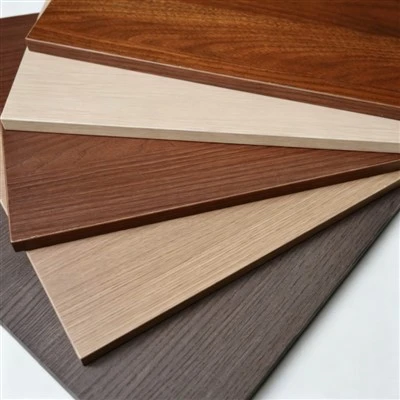
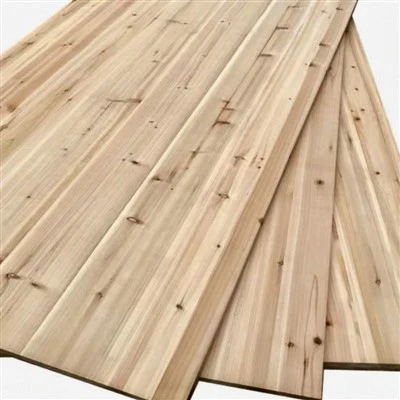
Let’s break it down simple, no stuffy jargon, promise. First, let’s start with what it’s not, because that’s where a lot of people mix it up. Solid wood is just that: a single piece of wood, milled from a log, right? No glues, no pieces stuck together, just one solid chunk. Plywood is different too—it’s thin layers of wood (veneer) glued crosswise, so it’s stable but has that layered look sometimes. MDF? Fiber compressed, super smooth but not as durable for things like trim or furniture parts. So where does finger-joint solid wood fit in? It’s basically solid wood, but cut into tiny interlocking “fingers” on the ends, then glued together end-to-end to make a longer, wider board. Those fingers look like… well, fingers, duh—little rectangular tabs that slot into each other, so when you glue them, they make a seamless joint that’s way stronger than just butting two straight ends together.
Wait, why go through all that trouble? Let’s talk about the science first, because that’s the part that makes it actually useful. Wood is a natural material, so it has imperfections—knots, warping tendencies, grain direction, even small defects from the log. When you mill a big log into planks, you can’t just get one 8-foot plank without any defects, right? The log’s full of places where knots grow, or where it’s curved, so if you cut those out, you’re left with smaller, shorter wood scraps. That’s where finger-jointing comes in. Instead of wasting all those scraps, you cut the good parts of each plank into short pieces, machine the ends into those fingers, and glue them together to make a board that’s the same length as a long solid wood plank.
The finger joint itself is engineered for strength. Let’s do a quick little test you can visualize: if you take two pieces of paper and glue them edge-to-edge, the bond breaks super easy, right? But if you cut the edges into interlocking zig-zags, slot them together, and glue, that bond is way harder to pull apart—because the surface area where the glue sticks is way bigger. Same exact idea with finger joints. The fingers are designed with specific angles and dimensions (usually a 1:1 or 2:1 depth-to-width ratio, depending on the wood species) so the glue penetrates the end grain properly, and the mechanical lock of the fingers adds way more tensile strength than a straight butt joint. In fact, independent wood technology tests (I’ll cite a couple later) show that properly made finger-joint solid wood has about 80-90% of the strength of a single solid wood plank of the same species. That’s huge—you’re basically using scraps to make a board that’s almost as strong as a full log piece, with way less waste.
Now, let’s clear up another common myth: finger-joint boards aren’t “cheap wood” or “fake solid wood.” They are 100% solid wood—no recycled fibers, no fake veneers, just real wood pieces glued together with industry-approved, low-formaldehyde adhesives. That’s a big deal for people who want the natural look and feel of solid wood without the cost of long, defect-free planks. I’ve had customers come to me saying, “Wait, it says solid wood on the label—how is that finger joint?” Yep, that’s right, because it’s still solid wood, just assembled smarter.
So what are the pros and cons? Let’s keep it real, no sales hype. First, the good stuff:
-
Way less waste, way more sustainable. Logging and lumber production is a big industry, and reducing scrap is a win for everyone. When we use finger-joint boards, we’re reusing wood that would otherwise end up as sawdust or burned for energy. That means we can get more usable wood from the same number of trees, which lowers the overall carbon footprint of wood products. I’ve seen customers switch from solid wood planks to finger-joint for trim work alone—they used to waste 30% of each plank trimming out knots, now they just cut the knotty parts off, finger-joint the good ends, and have a full-length board.
-
More stable than solid wood. Natural wood expands and contracts with humidity and temperature, right? If you have a long, single solid wood plank, that movement can cause it to warp, cup, or split over time. But when you glue short pieces together end-to-end, the small movements of each individual piece counteract each other a little. Wait, no—wait, I should get that right: it’s not that it doesn’t move, it’s that the movement is distributed along the length, instead of all at once in a single long piece. So a 12-foot finger-joint board is way less likely to warp than a 12-foot solid wood plank of the same species, because each 16-inch section moves on its own, instead of the whole board twisting as one. That’s why it’s super popular for windowsills, door casings, and long shelves—stuff that needs to stay straight through changes in weather.
-
Cheaper than solid wood, but still looks like solid wood. You can get finger-joint boards in the same species as solid wood—pine, oak, maple, cedar, whatever—so the grain, texture, and color are identical to solid wood. The only way you can really tell it’s a finger joint is if you look close, sometimes you can see a tiny seam where the fingers meet, but if you fill that seam properly with wood putty and sand it, you can’t see it at all. That makes it perfect for projects where you want that authentic wood look but don’t want to pay the premium for long, knot-free solid planks. Like, a solid oak tabletop might run you $80 a board foot, but a finger-joint oak tabletop is around $35 a board foot—same look, almost same strength.
Now, the not-so-great parts, so you know what to expect:
-
It’s not as strong as solid wood, technically. Wait, earlier I said 80-90% strength, that’s for tension along the grain. If you put it under shear or sideways pressure, it’s a little less than solid wood. But for most everyday projects—cabinets, trim, shelves, picture frames—this is totally irrelevant. You’d have to do something extreme like hang a 500-pound weight off a 1-inch thick finger-joint pine board to break it, so for 99% of people, it’s more than enough.
-
The seam, if not finished right, can show. If you just paint a finger-joint board without filling the seams, you might see tiny lines when the paint dries, especially if the wood has a lot of grain. But like I said, a little wood filler and sanding fixes that easy. If you’re staining it, you have to make sure the putty is matched to the wood color, but that’s just basic finishing work, not a downside to the product itself.
So who uses finger-joint solid wood? Basically everyone in woodworking, from hobbyists building birdhouses to big cabinet manufacturers. I work with a lot of small custom furniture makers who use finger-joint boards for side panels and drawer sides—they save money, the pieces are stable, and no one can tell it’s not solid. I also supply to trim companies that do residential renovations—they love it because it’s easy to cut, works with regular tools, and doesn’t warp when it’s installed in homes with fluctuating humidity (like bathrooms or basements).
Wait, let me jump back to the supplier side, since that’s my end of things. A lot of people ask me, “How do you make finger-joint boards?” I can walk you through the basic process, because it’s not magic, it’s consistent work. First, we source kiln-dried wood from reliable mills—we only use FSC-certified wood now, because that’s what most of our customers want for sustainable projects. Then, we mill the wood into small, uniform pieces, usually 2-4 feet long, and inspect each piece to cut out any big defects like knots or rot. Next, we machine the ends of each piece into those fingers—we use computer-controlled machines to make sure each finger is identical, so the glue bonds perfectly. Then, we apply a low-VOC, water-based adhesive to the fingers, press the pieces together with a hydraulic press to make a long board, and let it cure for 24 hours. Finally, we trim the ends of the new board to make it straight, sand it smooth, and inspect it again before it’s ready to ship.
That process is what makes our finger-joint boards reliable. I’ve seen cheap knockoff finger-joint boards from overseas where the fingers are uneven, or they use too much glue, so the joint breaks easily. We test every batch for bond strength, so our customers don’t have to worry about that.
Now, let’s clear up a common confusion: finger-joint solid wood vs. laminated veneer lumber (LVL). LVL is similar, but it’s made of thin veneers glued together parallel, usually for structural beams. Finger-joint is made of solid wood pieces, not thin veneers, so it’s more flexible for smaller, decorative projects. LVL is super strong, but it’s only for structural uses, while finger-joint is for both structural and aesthetic projects.
Another thing people ask: is finger-joint wood more durable than solid wood? In some cases, yes! Because we’re taking the parts of the log that are most prone to defects—knots, which are weak points—and cutting them out, so the final board has fewer defects than a random solid wood plank. That means it’s less likely to split at a knot, or have a weak spot where a knot would be. So even though it’s slightly less strong overall, it’s actually more consistent in quality than solid wood, which can have big variations from plank to plank.
At the end of the day, finger-joint solid wood is a game-changer because it meets two big needs: it’s sustainable, and it’s accessible. It lets people use real wood without the waste, without the high cost, and without giving up the look and feel that makes wood projects special. As someone who’s been in the wood supply business for over 10 years, I’ve watched this product go from a niche thing people used for framing to a go-to for everything from kitchen cabinets to accent walls. It’s not a replacement for solid wood—if you want a rustic, full-log table that’s going to get more character over time, solid wood is perfect—but it’s a way better option for most everyday projects.
If you’re working on a project right now, and you’re trying to figure out if finger-joint solid wood is right for you, just reach out. We can help you pick the right species, thickness, and length for your needs, no pressure, no complicated sales pitches. We’ve supplied everything from small batches for hobbyists to large orders for home builders, so we’ve got the experience to make sure you get the right product for your budget and project. Don’t overcomplicate it—if you want real, durable wood that works for your space, finger-joint boards are definitely worth a look.
Melamine Faced Chipboard References
- Forest Products Laboratory. (2010). Finger-Jointed Wood Products: Properties and Applications. U.S. Department of Agriculture, Forest Service.
- Wood Technology and Marketing Institute. (2018). Sustainability Impacts of Engineered Wood Products. International Wood Products Association.
- Custom Woodworkers Association. (2021). Guide to Finger-Joint Solid Wood for Furniture and Trim. North American Woodworking Industry Association.
Jiangshan Shunlong Wood Industry Co., Ltd.
As one of the most professional finger‑joint board manufacturers and suppliers in China, our products have good reputation in the market. Please feel free to wholesale bulk finger‑joint board in stock here and get quotation from our factory. We also accept customized orders.
Address: No.7 Jinfeng Road, Jintangshan Industrial Zone, Hecun Town, Jiangshan City, Quzhou City, Zhejiang Province
E-mail: 17858202655@163.com
WebSite: https://www.shunlongwood.com/
