As a supplier who’s worked with 304 stainless steel bars for over a decade, one question I get asked weekly—sometimes daily—from fabricators, construction crews, and small business owners is the same: “What’s the price of 304 stainless steel bar per meter?” It’s not a one-size-fits-all number, and anyone who tells you it is is probably skipping the details that actually matter. Over the years, I’ve watched this price swing like a pendulum, driven by factors most people don’t think about, and I’ve learned to break it down clearly for anyone looking to buy, whether you’re a first-time purchaser or a long-time client. Stainless Steel Bar
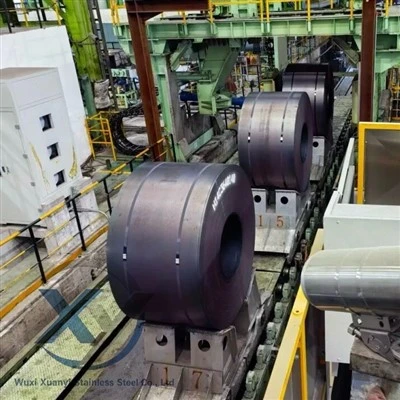
First, let’s start with the basics: 304 stainless steel isn’t just a single material—it’s an austenitic alloy made of chromium, nickel, and iron, and it’s the most common stainless steel bar we stock because it resists corrosion, is easy to machine, and works for everything from food processing equipment to structural fasteners. But even two identical bars labeled “304” can cost wildly different amounts depending on three big variables: diameter, length (but wait, we’re talking per meter, so length beyond standard stock isn’t as much of a factor, but still), and surface finish.
Let’s talk diameters first because that’s the biggest driver. I’ll use our most popular stock sizes to make this real. Last month, we sold 6mm diameter 304 stainless steel bars at about $1.20 per meter. That’s the smallest we carry for standard stock, right? Bump that up to 16mm, which is a go-to for construction anchors, and that jumps to $3.80 per meter. Then 25mm, used for shafts and general machining, is around $7.20 per meter. Now, if you go to a larger size, like 50mm, that’s $18.50 per meter, and a 100mm bar (for heavy structural parts) runs around $78 per meter. Wait a second—why does a bigger diameter cost so much more? It’s not just extra steel weight. Larger bars need more raw material, more energy to hot or cold roll, tighter quality checks during production, and they’re harder to machine later, so there’s more labor in the manufacturing process that passes along to the per-meter price.
Next, surface finish. Most of our standard stock bars have a 2B cold finish, which is smooth, consistent, and works for 90% of applications. That’s the price I quoted above. But if you need a polished 180 grit finish (for decorative railings, outdoor signs, or food equipment that needs extra cleanability), that adds 15-20% to the per-meter cost. A 320 grit polished finish, even for smaller diameters, is another 10% on top of that. If you want a mill finish (slightly rough, for structural uses where appearance doesn’t matter), it’s actually a tiny bit cheaper—like 5% less than the 2B finish. I’ve had clients who tried to skimp on finish only to find their bars rusted faster, or who paid for a polish they didn’t need, so it’s worth matching finish to your use case.
Then there’s the wild card: raw material costs. Nickel and chromium make up 304 stainless steel, and their prices fluctuate with global markets. A year ago, nickel was around $18,000 per metric ton, so 304 bars were about 10-15% cheaper than they are now. Six months ago, nickel spiked to $24,000 per ton because of supply chain issues from mining delays, so we had to raise our prices slightly across all diameters. Last quarter, it stabilized a bit, but we still adjust our per-meter prices monthly based on the London Metal Exchange rates—we don’t hold static prices because that’s not fair to clients who order in bulk and expect consistent, transparent costs. I once had a contractor who ordered 1,000 meters of 16mm bars in January, then came back in March for another 500 meters; I had to tell him the price had gone up $0.40 per meter, and he understood because he’d seen the market reports too.
Bulk orders also play a big role in per-meter price. If you’re buying just 10 meters for a small repair job, it’s not the same as 10,000 meters for a large construction project. Our minimum order is 1 meter, and for orders under 100 meters, we charge a premium of 10% because of handling, packaging, and material waste. If you order 500 meters or more, we can knock 12-15% off the per-meter price because we can get volume discounts on raw material and streamline our shipping. Last year, a local food processing company ordered 8,000 meters of 25mm 304 bars for new conveyor supports, and their per-meter price was $6.10—almost 15% lower than a small café would pay for 20 meters of the same size. That’s why I always tell clients: if you’re using it for a big project, order as much as you can to get the bulk rate; it saves you money in the long run.
Wait, what about custom lengths? Most of our stock bars are 6 meters long, which is the standard for shipping and handling. If you need a shorter cut, like 2 meters, we can do that, but there’s a $5 cutting fee per order, so that adds to your cost. If you need a longer length, like 8 meters, we can source it, but that often comes with a 7% surcharge because longer bars are harder to transport and require special packaging to prevent bending. I’ve had clients get frustrated when I mention that surcharge, but last year a construction company tried to skip it by buying two 6-meter bars and welding them, and the weld rusted in 6 months—so the longer, single bar was worth the extra cost for their outdoor bridge project.
Now, let’s talk about common misconceptions. A lot of people ask me if 304 is cheaper than 316. It is, usually 10-20% per meter, but only because 316 has molybdenum, which is more expensive. But here’s the catch: if you’re using 304 in a coastal environment or near chemicals, it might rust, and then you’ve wasted money on the cheaper bar. I had a marine parts maker last year who ordered 50 meters of 16mm 304 bars for boat cleats, and they came back a month later asking to exchange them for 316 because the saltwater was corroding the 304. We did the exchange, but I told them upfront—so don’t just chase the per-meter price; match the grade to your application, because a cheaper bar that fails ends up costing more in replacements and labor.
Another misconception: all 304 bars are the same. We test every batch of our 304 bars to make sure they meet ASTM A276 standards, which means they have the right chromium and nickel content. Some cheaper suppliers cut corners with lower nickel content, which makes the bars prone to rust. I once got a call from a small fabricator who bought 100 meters of 12mm 304 bars from another supplier, and half of them rusted before he could finish machining. He came to me to replace them, and I showed him a test strip of our bars that didn’t rust when we sprayed saltwater on it for 24 hours. The per-meter price was a bit higher, but his parts wouldn’t fail. That’s the value we offer as a supplier—you’re not just paying for steel, you’re paying for consistent quality.
Let me also break down a sample per-meter price list for our stock 304 bars (as of mid-2024, for 2B finish, standard 6-meter lengths):
- 6mm: $1.15-$1.30 per meter
- 10mm: $2.20-$2.45 per meter
- 16mm: $3.75-$4.00 per meter
- 25mm: $7.10-$7.40 per meter
- 50mm: $18.20-$19.00 per meter
- 100mm: $76-$80 per meter
This isn’t set in stone, but it’s a good baseline. If you need specific grades (like 304L, which is low carbon for welding) or custom processing (drilling, threading, sandblasting), we can adjust the price, but again, I always explain why the cost changes.
At the end of the day, the “price per meter” isn’t a number you can pull from a Google search without context. It depends on diameter, finish, order volume, raw material costs, and even how you’re using the bars. For me, as a supplier, my job isn’t just to quote a price—it’s to help you get the right 304 bar for your project at a fair, transparent cost. If you’re planning a project, whether it’s a small DIY job or a large construction run, reach out to our team to talk through your needs. We can give you a custom quote, answer any questions about grades or finishes, and make sure you don’t overpay for material you don’t need, or underpay for a bar that will fail prematurely.

Don’t make the mistake of choosing the cheapest per-meter price you find—sometimes that comes with hidden costs down the line. Let’s walk through your project, figure out exactly what size, finish, and volume you need, and get you a clear, honest price that works for both of us. We’re here to help, so reach out to start the conversation.
Pipe References:
- ASTM International. (2023). Standard Specification for Stainless Steel Bars and Shapes (ASTM A276).
- London Metal Exchange. (2024). Nickel and Chromium Monthly Price Report.
- Stainless Steel Industry Association. (2024). 304 Stainless Steel Alloy Performance Guidelines.
Wuxi Xuanyi Stainless Steel Co., Ltd.
Wuxi Xuanyi Stainless Steel Co., Ltd. is one of the most professional stainless steel bar manufacturers and suppliers in China. With abundant experience, we warmly welcome you to wholesale bulk durable stainless steel bar made in China here from our factory. If you have any enquiry about cooperation, please feel free to email us.
Address: 1207-1208, Building 11, Shengang Metropolis Plaza, No. 299 Fangcheng Avenue, Xinwu District, Wuxi City,China.
E-mail: jscherryxy@163.com
WebSite: https://www.xuanyisteel.com/
