Hey folks, let’s cut to the chase – if you’re a substation transformer supplier or anyone that relies on these big workhorses to keep the lights on, you know their performance isn’t just about the unit itself. I’ve spent years on the floor, hanging out with grid operators and doing site audits across North America, and I can tell you the environment around a transformer can make or break how long it lasts and how well it runs. Today, I’m breaking down the real environmental factors we see every single day, not just the textbook stuff, and why they matter if you’re out there buying or maintaining these units. Substation Transformer
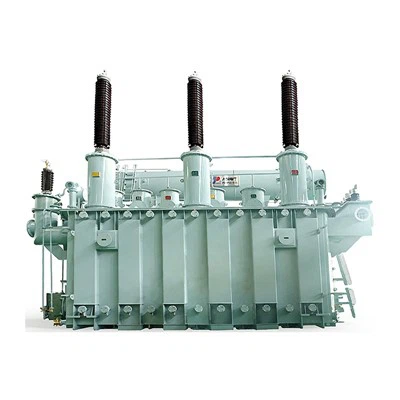
First up, temperature extremes – and I don’t just mean “it’s hot or cold outside.” A lot of guys I work with dismiss this as a seasonal thing, but let’s get specific. Transformers generate heat when they’re in use, right? They rely on oil or liquid coolants to carry that heat away and radiate it out. But if the ambient temp is consistently over 100°F (38°C), that coolant can’t do its job as well. I’ve seen units in the Southwest US that run 15-20°F above their rated operating temp in mid-summer – that’s not just a minor blip. Over time, that extra heat breaks down the insulation paper around the windings. We’re talking accelerated aging here – instead of a 30-year lifespan, you’re looking at 20 or less. On the flip side, extreme cold? That’s a different headache. If temps drop below -20°F (-29°C), the mineral oil in older transformers can get too thick to circulate. We had a job in northern Canada a couple years back where a client’s backup transformer failed overnight because the oil gelled, and they lost power to a remote mine for 12 hours. That’s not a small problem. Modern units come with cold-weather rated coolants and heating elements, but a lot of older ones don’t – and if you’re not accounting for local temps when picking a unit, you’re setting yourself up for issues. We always ask clients to share their extreme temp data before we even quote a unit, because one size doesn’t fit all.
Next, humidity and moisture – this one’s sneaky. It’s not just how much moisture is in the air; it’s swings in humidity that cause condensation. Think about it: a transformer is hot when it’s running, so when it shuts down at night, the metal casing cools, and any humidity in the air turns into water droplets. Those droplets can seep past gaskets or into the breather valve. I’ve pulled apart transformers where the winding insulation was fuzzy with mold – that’s moisture damage right there. Even worse, if moisture mixes with the coolant, it forms acids that eat away at the metal windings. Coastal areas are the worst, by the way. Salt air in places like Florida or the Gulf Coast? Salt is a corrosive bastard. It sticks to the casing, seeps into electrical connections, and causes flashovers. One client in Miami told me their transformers were failing every 10 years instead of 25, all because salt spray ate through the insulation. That’s why we offer sealed breathers and corrosion-resistant casings for coastal locations – it’s not an upgrade, it’s a necessity. A lot of suppliers will cut corners here, but we’ve seen firsthand what happens when you skip that.
Then there’s pollution and airborne contaminants – and I don’t just mean random dust. Industrial areas, mining operations, even farmlands can have all kinds of stuff floating around. In industrial zones, you get heavy metals, sulfur compounds, and chemical fumes that are corrosive. Last year, we worked with a steel mill just outside Pittsburgh. Their transformers were covered in iron dust every shift, and that dust would build up on the bushings (the parts that carry current outside the unit) until it created a conductive layer. When it rained, that dust mixed with water, created a short circuit, and blew the bushing. We ended up installing air filters on the cooling vents and washdown ports for regular cleaning, and that cut their bushing failures by 80%. Farmlands are a different story – crop dusters, fertilizer dust, even animal waste particles. Those can clog up the cooling fins, so the transformer can’t radiate heat properly. We had a farmer in Iowa who thought his transformer was just old, but it turned out the cooling fins were full of corn dust, so it was running 10°F over temp nonstop. That’s a preventable issue if you know what to look for.
Altitude is another one that’s easy to overlook. Most transformers are designed for sea level, right? But if you’re at 5,000 feet or higher, the air is thinner. Thinner air means less oxygen, so cooling is less efficient. The coolant still generates the same heat, but there’s less air to carry it away. We had a job in Denver a while back – someone bought a standard sea-level transformer for a substation at 5,280 feet, and it overheated within a month. The fix? We had to adjust the cooling fan size and up the coolant flow rate to compensate for the thinner air. A lot of people don’t check altitude specs when ordering, but it’s a critical factor. We now add altitude checks to every site survey before quoting, because a unit that works at the coast might tank in the Rockies.
Wait, let’s not forget vibration and seismic activity. If your substation is near a busy highway, a construction site, or in an earthquake zone, that constant vibration (or sudden shaking) can loosen connections over time. I’ve seen terminals that were meant to be tight shake loose after a few years of daily semi-truck rumble, leading to arcing and power outages. In areas with high seismic risk, like California, you have to account for the fact that the transformer might shift during an earthquake. We offer reinforced mounting brackets and flexible connections for those areas – it’s not just about the unit’s performance, it’s about keeping it in one piece when the ground moves. A client in Los Angeles told us their old transformer’s terminal broke off during a small quake, and it cost them $50k in downtime and repairs. That’s not a cost you want to absorb.
Now, here’s the thing – all these factors don’t act alone. It’s usually a combination that causes problems. Let’s take that coastal transformer I mentioned earlier: high humidity + salt air + high temps = a perfect storm for corrosion. The salt eats the insulation, the moisture breaks down the coolant, and the heat speeds up the chemical reactions. It’s not just one issue, it’s a chain reaction. That’s why we never just sell a transformer and walk away. We work with clients to do a full site assessment – check temp extremes, humidity levels, pollution, altitude, even seismic risk – so we can spec a unit that’s built for their specific environment. A lot of suppliers will just push a standard unit, but that’s short-sighted. We’ve built our business on matching the right transformer to the right location, because that’s what keeps them running.
I hear a lot of people say “transformers are just big metal boxes, how hard can it be?” But if you’ve been in the game as long as I have, you know it’s all about the details. That breather valve that costs $20 extra? It saves you $20,000 in repairs down the line. The cold-weather coolant that adds $500 to the unit? It prevents a 12-hour outage in the middle of winter. The reinforced mount for seismic zones? It keeps your transformer from falling apart during a quake. These aren’t just sales pitches – they’re lessons we’ve learned from clients who skipped them and paid the price.
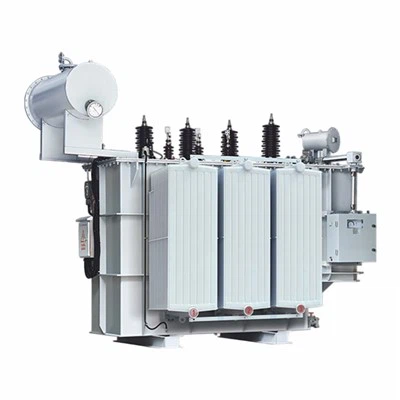
If you’re in the market for a substation transformer, or if your current units are acting up and you’re not sure why, we can help. We’ll come out to your site, walk through all those environmental factors, and spec a unit that fits your needs. Don’t wait until a failure costs you downtime – reach out and let’s work together to make sure your transformers perform, no matter what their environment throws at them.
Integrated Transformer References
- IEEE Std. C57.12.00-2020, “IEEE Standard for General Requirements for Liquid-Immersed Distribution, Power, and Regulating Transformers”
- NEMA Standards Publication No. TP 1-2018, “Test Procedure for Temperature Rise of Liquid-Immersed Power Transformers”
- Electric Power Research Institute (EPRI), “Environmental Stressors and Transformer Aging” (2021)
- American Transmission Company (ATC), “Coastal Transformer Corrosion Mitigation Guidelines” (2020)
- International Electrotechnical Commission (IEC) 60076-1, “Power Transformers – Part 1: General”
Nantong Yawei New Energy Technology Co., Ltd.
As one of the most professional substation transformer manufacturers and suppliers in China, we’re featured by quality products and good service. Please rest assured to wholesale durable substation transformer made in China here from our factory. Customized orders are welcome.
Address: Room 28-101, Building 27 and 28, No.333 Kaiyuan Avenue, Sunzhuang Subdistrict, Hai’an City, Nantong City, Jiangsu Province, China
E-mail: admin@nantongyawei.com
WebSite: https://www.nantongyawei.com/
