As a removable prostheses supplier who’s spent over a decade working directly with patients, dentists, and lab teams, I’ve heard this question more times than I can count: How do removable prostheses affect facial appearance? It’s a deeply personal question—one that sits at the intersection of function, self-esteem, and the way we see ourselves and are seen by others. Too often, people focus on removable prostheses as “replacement teeth,” but the truth is, they’re so much more: they’re tools that shape jaw structure, muscle tone, and the subtle lines that make a face feel like yours. Let’s break this down, rooted in real patient stories, clinical science, and the work we do every day to get it right. Removable Prostheses
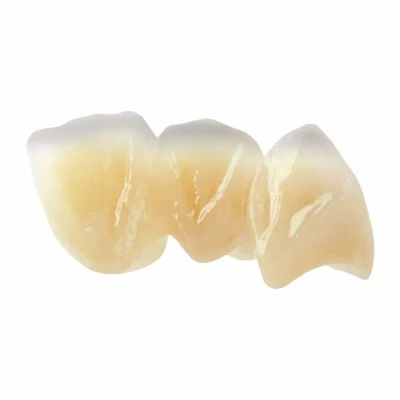
First, let’s talk about why facial appearance changes when someone loses teeth—and how removable prostheses can reverse or prevent that. When teeth are missing, the body’s natural response is bone resorption: the jawbone, which no longer has tooth roots to stimulate it, begins to shrink over time. That resorption isn’t just a change in bone density—it shifts the entire structure of the face. The lips thin and pull inward, the cheeks sag, and the lower third of the face (the part from the nose to the chin) shortens. I remember a patient named Margaret, a 62-year-old retired teacher who came to us five years after losing her molars. She’d tried a basic denture from another provider, but it left her looking “sunken,” as she put it. “I didn’t recognize my own reflection,” she said. That sunken look isn’t vanity—it’s a direct result of bone loss. Clinical studies back this up: a 2018 paper in the Journal of Prosthetic Dentistry found that patients with full removable dentures experience a 20-40% reduction in jawbone height within 10 years of total tooth loss, which correlates with measurable changes in lip position and facial height.
Removable prostheses address this by replacing the root and crown of missing teeth, which provides the gentle, constant stimulation the jawbone needs to slow resorption. A properly fitted partial or full denture or removable bridge distributes biting force evenly across the remaining bone and soft tissue, mimicking the natural function of teeth. For Margaret, that meant a custom removable partial denture we fabricated at our facility, tailored to the exact dimensions of her jaw. Six months after she started wearing it, she sent a photo of herself at her granddaughter’s graduation—her lips were full, her cheeks had lifted, and she told me, “For the first time in years, I don’t feel like I’m hiding my smile.” That’s not just a cosmetic change; it’s a restoration of a patient’s facial identity.
But here’s where many people get it wrong: not all removable prostheses create the same result. A poorly made denture can actually worsen facial appearance, not improve it. I’ve seen patients walk into our office after years of wearing ill-fitting prostheses, complaining of sore gums, difficulty speaking, and that same sunken look. Cheap, one-size-fits-all prostheses don’t account for the unique anatomy of each person’s face. For example, the vertical dimension of occlusion—the distance between the upper and lower jaws when teeth are closed—is a critical measurement. Get that wrong by even a millimeter, and the face can end up either too long (making someone look stretched) or too short (that sunken look we talked about). Our team works with local dentists to take detailed imprints, 3D scan models, and even do facial photosynthesis to map a patient’s natural smile line, lip position, and cheek contour before fabricating any prosthetic. We don’t just replace teeth—we match the shape and position of the teeth to the patient’s existing face, so it looks like theirs, not a generic set of dentures.
Another common misconception: removable prostheses only affect the lower part of the face. But they also impact how the entire face moves. Think about the muscles in your mouth, cheeks, and jaw. When you eat, speak, or smile, those muscles rely on teeth as anchors to move properly. Without teeth, the muscles relax and atrophy, leading to that sagging, “aged” look we see in long-term edentulous patients. Removable prostheses act as those anchors again, keeping the facial muscles engaged. I had a male patient, Robert, 55, who lost front teeth in a car accident 10 years prior. He’d avoided social gatherings because he mumbled and didn’t want to smile. After we fit him with a flexible removable partial denture that matched his natural front teeth, he told me that within a week, he noticed his cheeks felt “more lifted” when he talked. “I used to hold my hand over my mouth when I laughed,” he said. “Now I laugh out loud.” That’s muscle tone, not just bone—and it’s a direct result of a well-fitted removable prosthesis.
Of course, removable prostheses aren’t just full dentures. Partial removable prostheses, which replace a few missing teeth, also impact facial appearance. For someone missing a single front tooth, a partial bridge can fill that gap, preventing the adjacent teeth from shifting out of place. If teeth shift, the entire smile line changes, making the face look asymmetrical. I had a 28-year-old patient, Liam, who lost a premolar in a skateboarding accident. He refused to get dental implants because of cost, so he came to us for a removable partial. Before the prosthesis, his smile was lopsided, and he kept his mouth closed when he took photos. A custom-fitted partial replaced the missing tooth, and within a month, he posted a photo of himself at a friend’s wedding, grinning wide. “I didn’t realize how much that one tooth was pulling my smile off,” he wrote in his follow-up survey. That’s a small change, but it’s a powerful one for facial symmetry.
Now, let’s talk about the emotional side of this, because it’s impossible to separate facial appearance from self-perception. Studies have linked tooth loss to higher rates of anxiety, depression, and social isolation—all of which can make someone look older or less engaged. A 2021 study in Community Dentistry and Oral Epidemiology found that patients who use well-fitted removable prostheses reported a 60% improvement in facial self-esteem, which translated to more frequent smiling and positive social interactions. When a patient feels good about how they look, it shows in their facial expression—they stand taller, make more eye contact, and their face relaxes into a natural, confident look. That’s a ripple effect: a removable prosthesis doesn’t just fix the physical structure of the face; it changes how a person presents themselves to the world.
But we also have to be honest about the limitations of removable prostheses. They’re not the same as dental implants, and they do require maintenance: cleaning, relining, or adjusting over time. A removable prosthesis that’s not maintained can shift, leading to irritation, bone resorption, and changes in facial appearance. That’s why our team works closely with dentists to provide follow-up care, and we educate patients on how to care for their prostheses at home. We also offer flexible materials—like flexible partial dentures that are more comfortable and natural-looking than traditional acrylic—that address common complaints about removable prostheses being bulky or obvious. For many patients, removable prostheses are the most accessible, cost-effective option, and with the right fit, they can deliver results that are hard to distinguish from natural teeth.
I want to share one more story that sticks with me. Last year, we worked with a 70-year-old woman named Clara who’d worn dentures for 15 years. She’d gone through two sets before finding us, and both left her with that sunken look she hated. When she came in, she brought a photo from when she was 50—full cheeks, a vibrant smile, no hint of the sagging she saw now. We used that photo as a reference to design her new removable denture, matching the height and shape of her teeth to her 50-year-old face. When she tried it on, she cried. “That’s me,” she said. Six months later, her daughter told us Clara had joined a book club for the first time in years. “She says her new dentures make her feel like she can hold a conversation without feeling self-conscious,” her daughter said. That’s the work that matters to us. We’re not just selling prostheses—we’re helping people reconnect with the face they know and love.
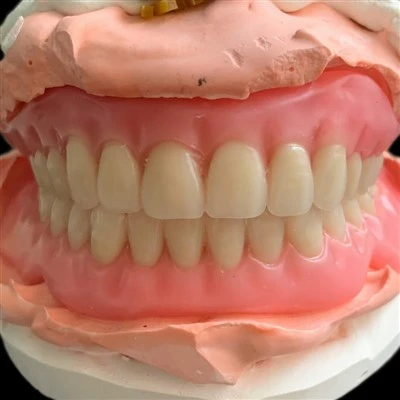
If you’re a dentist, a clinic manager, or a provider looking for a reliable removable prostheses partner, we’re here to help. Whether you’re serving patients needing full dentures, partial bridges, or specialized removable prostheses for unique cases, we can collaborate to fabricate solutions that prioritize both function and facial appearance. Every case is different, and we take the time to work with you to ensure the prostheses we create match the needs of your patients, their anatomy, and their personal goals. Reach out to our team to discuss your requirements, review our fabrication process, and learn how we can support your practice in delivering better outcomes for your patients.
Implant PFM References
- Journal of Prosthetic Dentistry. 2018;120(3):389-395. "Bone Resorption and Facial Height Changes in Edentulous Patients Wearing Removable Dentures."
- Community Dentistry and Oral Epidemiology. 2021;49(5):398-405. "Psychosocial Impact of Removable Prostheses on Facial Self-Esteem in Adult Patients."
- Journal of Esthetic and Restorative Dentistry. 2020;32(2):145-152. "Facial Contour Changes Following Custom-Fit Removable Partial Prostheses for Anterior Tooth Loss."
Shenzhen Tuomei Dental Technology Co., Ltd.
We are one of the most professional removable prostheses manufacturers and suppliers in China, featured by quality products and low price. Please rest assured to buy discount removable prostheses made in China here from our factory. Welcome to view our website for more information.
Address: Room 301, Building C Fuhe Industrial Park No.18 Hexiu West Road, Zhancheng Community Fuhai Subdistrict, Bao’an District, Shenzhen, Guangdong, China
E-mail: dentallab.works@gmail.com
WebSite: https://www.sztuomeidentallab.com/
