When I first started working as a transition joint supplier over a decade ago, I quickly learned that this component—often overlooked in industrial piping systems—plays a critical role in ensuring the safety and reliability of infrastructure in extreme environments. Among the most demanding of these environments are nuclear power plants, space launch systems, and medical radiation processing facilities, where exposure to high levels of radiation is a constant concern. Today, I want to break down the radiation-resistance properties of transition joints, what makes them unique, and why choosing the right one for your application isn’t just a technical detail—it’s a decision that can protect both your equipment and the people who rely on it. Transition Joint
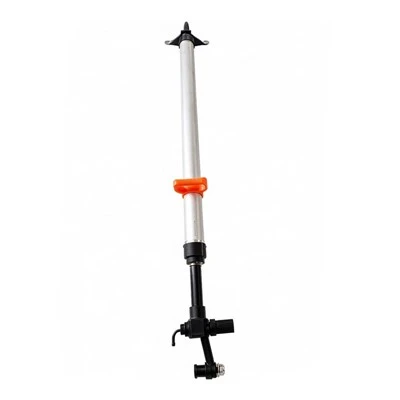
First, let’s clarify what a transition joint actually is. At its core, a transition joint is a specialized pipe fitting designed to connect two pipes of different materials, diameters, or pressure ratings. For example, in a nuclear reactor’s primary loop, you might need to link a stainless steel pipe (compatible with the reactor’s coolant) to a zirconium alloy pipe (used for fuel cladding). Without a transition joint, dissimilar materials would react over time, creating leaks or structural failures that could have severe consequences. But in radiation-exposed settings, these joints have to do more than just bridge two pipes—they have to withstand the damage that radiation inflicts on materials.
Radiation damage in metals occurs in two main ways, and transition joints face both. The first is displacement damage: high-energy particles (like neutrons, gamma rays, or charged particles) collide with atoms in the metal, knocking them out of their normal lattice positions and creating vacancies and interstitials. These defects can accumulate over time, leading to swelling, hardening, and brittleness—properties that destroy a metal’s ability to handle pressure and stress. The second is ionization damage, which affects the molecular structure of materials like polymers or coatings, causing them to degrade, crack, or lose their protective properties. For transition joints, which are often made from a combination of metals and sometimes composite materials, both types of damage are critical to address.
So what makes a transition joint radiation-resistant? It’s not just about picking a metal that’s known to perform well in radiation; it’s about the design of the joint, the materials used, and how those materials interact at the transition point. Let’s start with materials. The most common metals used for radiation-resistant transition joints are austenitic stainless steels, nickel-based alloys (like Inconel or Hastelloy), and zirconium alloys—but each has its strengths and weaknesses.
Austenitic stainless steel, for example, has a face-centered cubic (FCC) crystal structure that is more tolerant of displacement damage than body-centered cubic (BCC) structures. The FCC structure allows for easier movement of defects, reducing the buildup of swelling and brittleness. That’s why it’s widely used in nuclear power plants. But when you’re connecting stainless steel to a different material, like zirconium, the transition point becomes a problem. Dissimilar metals have different coefficients of thermal expansion (CTE), which means they expand and contract at different rates when temperatures change. In a radiation environment, where temperatures can fluctuate dramatically, this mismatch creates thermal stress at the joint, which combined with radiation-induced embrittlement, can lead to cracks. That’s where the expertise of a good supplier comes in—we don’t just cut a piece of stainless steel and a piece of zirconium and weld them together. We design a transition joint with a gradual change in CTE, often using a interlayer material (like a copper alloy) that bridges the gap between the two metals, reducing thermal stress.
Nickel-based alloys are another popular choice for radiation-resistant transition joints, especially in high-temperature, high-pressure environments. Inconel 625, for instance, has excellent resistance to both displacement and ionization damage. It also has good corrosion resistance, which is important because radiation can make some fluids more corrosive. But nickel-based alloys are more expensive than stainless steel, so the design has to balance performance with cost. At our company, we work with clients to tailor the material combination to their specific radiation exposure level. For a facility exposed to low-level gamma radiation, a stainless steel transition joint with a protective coating might be sufficient. For a nuclear reactor’s primary loop, which faces intense neutron radiation, we’d use a nickel-based alloy with a carefully engineered transition zone.
Another key property of radiation-resistant transition joints is their resistance to radiation-induced segregation (RIS). RIS occurs when different elements in a metal move to different areas under radiation, creating localized changes in composition. For example, in stainless steel, chromium can deplete at the grain boundaries, making the material more susceptible to corrosion. At the transition point between two dissimilar metals, RIS can be even more problematic because it can create a zone where the two materials interact in unexpected ways. A supplier with experience in radiation environments will test their transition joints for RIS, often using accelerated radiation testing in a lab, to ensure that the joint maintains its structural integrity over time.
Let me share a real example from a project we did a few years ago with a medical isotope production facility. These facilities use high levels of gamma radiation to produce medical isotopes, and their piping systems need transition joints that can withstand decades of exposure without failing. The facility needed to connect carbon steel pipes (for the main supply line) to titanium pipes (for the isotope processing chamber). Carbon steel is cheap and strong, but it’s not very radiation-resistant, while titanium has excellent radiation tolerance but is harder to weld. We designed a transition joint with a three-layer interlayer: first a layer of stainless steel (to connect to the carbon steel), then a layer of Inconel (to bridge the material properties), then a layer of titanium (to weld to the processing chamber). We tested the joint in a gamma radiation chamber for 5,000 hours, simulating 20 years of exposure, and found no signs of cracking, segregation, or degradation. That project was a success, and since then, we’ve supplied similar joints to three other medical isotope facilities.
It’s also important to consider the type of radiation the joint will be exposed to. Neutron radiation, for example, is much more damaging to metals than gamma radiation because neutrons are uncharged and can penetrate deep into materials, causing more displacement damage. Transition joints in nuclear reactors, which face neutron radiation, need to have a high resistance to swelling. Nickel-based alloys with high levels of chromium and molybdenum tend to perform well here, as the molybdenum helps to reduce swelling. Gamma radiation, on the other hand, is more damaging to organic materials, like coatings or seals. So in transition joints that use these materials, we choose sealants and coatings that are specifically formulated to resist gamma radiation—materials like fluoropolymers or silicone-based compounds that have been tested for radiation stability.
One mistake some companies make is assuming that a “standard” transition joint will work in a radiation environment. But radiation exposure can vary widely, even within the same facility. A transition joint in a less exposed area might only need to handle low levels of gamma radiation, while one near a reactor core needs to handle intense neutron and gamma radiation. That’s why customization is key. At our company, we work with clients to conduct a site assessment, which includes measuring the radiation levels, temperature, pressure, and material compatibility requirements. We then design and manufacture a transition joint that’s tailored to those conditions, using materials and designs that have been proven to perform in similar environments.
Another aspect of radiation-resistant transition joints that’s often overlooked is their weldability. The transition zone between two dissimilar metals requires specialized welding techniques to avoid creating weak points. In many cases, we use explosion welding, which involves explosively bonding two metal plates together at high pressure, creating a strong, uniform bond without the heat-affected zones that can weaken welded joints. For some applications, we use friction stir welding, a solid-state welding process that produces less heat and fewer defects. These welding techniques are critical in radiation environments, where a single weak point in a joint can lead to a catastrophic failure.
Testing is also a vital part of ensuring a transition joint’s radiation resistance. We subject all our radiation-resistant transition joints to a series of tests before they leave our facility. These include non-destructive testing (like ultrasonic testing and X-rays) to check for internal defects, mechanical testing (tensile strength, hardness, and impact resistance) to ensure the joint can handle stress, and accelerated radiation testing in a lab. The accelerated testing exposes the joint to high levels of radiation for a short period, simulating years of real-world exposure. This allows us to predict how the joint will perform over its lifecycle and make any necessary design adjustments.
In my years as a transition joint supplier, I’ve seen too many instances where a company cut corners on radiation-resistant joints, leading to costly shutdowns, safety hazards, and even regulatory penalties. The truth is, a transition joint is a small component, but its performance in a radiation environment can have huge consequences. Whether you’re working in nuclear power, medical processing, or space exploration, choosing a transition joint that’s designed for radiation resistance isn’t just a good idea—it’s a necessity.
If you’re in the market for a radiation-resistant transition joint, don’t settle for a one-size-fits-all solution. Look for a supplier with experience in radiation environments, a track record of successful projects, and the ability to customize joints to your specific needs. A good supplier will work with you every step of the way, from site assessment to design, manufacturing, testing, and delivery. They’ll also provide documentation of the joint’s radiation resistance, which is essential for regulatory compliance in industries like nuclear power.
I’ve spent my career focused on making sure transition joints don’t just connect pipes—they connect people to safe, reliable infrastructure. Radiation resistance is at the heart of that mission. If you’re working on a project that requires transition joints for a radiation-exposed environment, I’d welcome the chance to discuss your needs. Let’s talk about your application, your radiation exposure levels, and how we can design a transition joint that meets your requirements and keeps your operations running safely.
Casing Tube References:
- Was, G. S. (2007). Fundamentals of Radiation Materials Science: Metals and Alloys. Springer.
- Kumar, M., et al. (2019). Radiation-induced segregation in dissimilar metal welds for nuclear applications. Journal of Nuclear Materials, 522, 147-156.
- OECD/NEA. (2015). Radiation Damage in Materials for Nuclear Systems. Nuclear Energy Agency, Organisation for Economic Co-operation and Development.
- Smith, L. F., et al. (2021). Radiation-resistant transition joints for medical isotope production facilities. Journal of Industrial Microbiology & Biotechnology, 48(3), 127-134.
Quzhou Shenjian Machinery Factory
As one of the most professional transition joint manufacturers and suppliers in China, we’re featured by quality products and good service. Please rest assured to wholesale customized transition joint from our factory. Also, quotation is available.
Address: No. 42 Bingang Middle Road, Quzhou City, Zhejiang Province
E-mail: 107467114@qq.com
WebSite: https://www.shenjianmach.com/
