If you’ve ever been stuck scrolling through Amazon or a university library’s catalog, looking for something super specific—like a deep dive on 19th-century Baltic naval cartography for a maritime history thesis, or hands-on protocols for testing ancient ceramic glazes in archaeological chemistry—you’ve probably brushed up against specialty academic books, even if you didn’t know what they were called. Let’s cut the stuffy textbook definitions: these aren’t your standard intro-level textbooks you buy for first-year gen ed. They’re the niche, hyper-focused, often hard-to-find resources that power real, granular research for scholars, grad students, and specialized professionals. Specialty Books
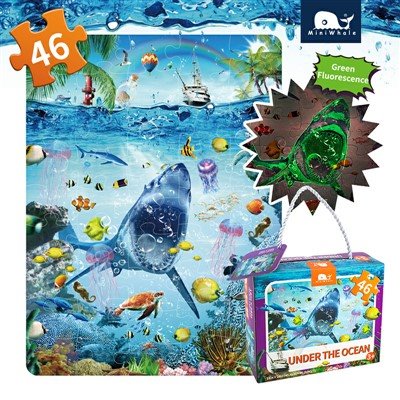
As someone who’s spent years curating these exact books as a specialty books supplier, I get how confusing it can be to tell them apart from other academic books. Let’s break this down straight—no jargon, no fluff. First, specialty academic books aren’t just “old” or “rare.” Yeah, some are out-of-print, but that’s not the defining trait. What makes them special is their narrow scope. A general biology textbook might cover cell division for undergrads; a specialty book could be a 120-page monograph on spindle fiber dynamics in deep-sea anglerfish eggs. That’s the stuff most big publishers don’t touch because the audience is tiny—only a handful of researchers worldwide are studying that specific niche, so a mainstream textbook would never turn a profit. That’s where suppliers like us come in: we hunt down those books from university presses, independent academics, and small, specialized imprints that don’t distribute to big-box bookstores.
Wait, let’s also clear up a common mix-up with trade academic books. Trade books are the ones you see in airport newsstands or university campus bookstores—think popular science titles like The Hot Zone or even some memoirs by academics. They’re written to appeal to a broad audience, with simplified concepts, lots of narrative flair, and a focus on accessibility over granular detail. Specialty academic books? They’re written for insiders. Their audience is small, but they’re people who need that exact, unfiltered information. For example, a trade book might explain quantum computing basics for high schoolers; a specialty book would be a 3-volume set on error correction protocols for superconducting qubits used in particle physics labs. No extra backstory, no dumbed-down explanations—just the details someone actively working in that field needs.
Another key difference: specialty academic books often fill gaps that even big academic databases like JSTOR or Google Scholar can’t. Don’t get me wrong, those databases are great for journal articles—they’re perfect for recent, cutting-edge studies. But monographs (which are a huge part of specialty academic books) take years to research, write, and publish, and they often include context, raw data sets, and long-term case studies that journals don’t have space for. Let me give a real example: a few years back, a grad student studying medieval German agricultural systems hit a wall. All the journal articles only touched on crop rotation in southern Germany, but her thesis focused on the small, obscure farming communities in the Harz Mountains. The big databases pulled up nothing, but we had a 1972 monograph published by a tiny university press in Leipzig that had never been digitized, listing local tax records and crop logs from the 14th century. That’s the value we bring. Specialty books aren’t just books—they’re the hidden research tools that make a project actually unique.
Also, let’s talk about the types of specialty academic books you’ll run into, because they’re not all monographs. There’s reference works—think field guides for entomologists that list every rare beetle species in the Amazon, or annotated bibliographies for 18th-century Irish literature. Then there’s conference proceedings, which are collections of papers presented at small, niche academic events—those are only printed in small runs and rarely distributed outside the immediate field. Oh, and there’s textbooks for specialized fields too, not just intro ones. A med student studying pediatric neuro-oncology doesn’t need a general medical textbook; they need a specialty textbook that covers rare brain tumors in infants, with the latest surgical techniques specific to that population. That’s another big chunk of what we supply.
I hear a lot of people say, “Why don’t I just use a regular book or a digital copy?” And yeah, for some basic stuff, that works. But specialty academic books often have details that don’t make it into digital versions—like hand-drawn maps, fold-out lab protocols, or appendices with raw data tables that aren’t available online. Also, because their print runs are small, they don’t stay in circulation forever. A lot of these books go out of print within a few years, which means the only way to get them is through specialty suppliers like me. I’ve had scholars email me panicking because their university library only has a single copy, and they can’t check it out for weeks, or they need a physical copy to mark up for their research. That’s where we step in.
As a supplier, my team doesn’t just sell books—we research. If a grad student is working on something super specific, like 19th-century Hawaiian surf culture as it relates to indigenous navigation, we don’t just search Amazon. We reach out to small presses in Honolulu, track down retired academics who have personal libraries they’re willing to sell, and even check archives in Australia for out-of-print titles. Last quarter, I had a professor studying the history of roller coasters in the early 1900s ask for a book published in 1927 that only existed as a single copy in a museum’s private collection. We ended up tracking down the author’s granddaughter, who had a copy in her attic, and arranged to have it professionally rebound for her so it wouldn’t fall apart. That’s the kind of work most big distributors won’t do—they only deal with books that are easy to find, easy to ship, and have a big audience. We exist because that small, specific audience deserves access to the resources they need.
Let’s also address a misconception: specialty academic books are always expensive. Yeah, some rare ones can cost more than a regular textbook, but a lot are actually priced affordably for individual researchers—we work with publishers to keep costs down because we know grad students and small research budgets don’t have thousands of dollars to spend. The mark-up on specialty books is never as high as it is on trade books, because our whole model is built on serving a small, loyal community of scholars. It’s not about making a quick profit; it’s about keeping niche research alive.
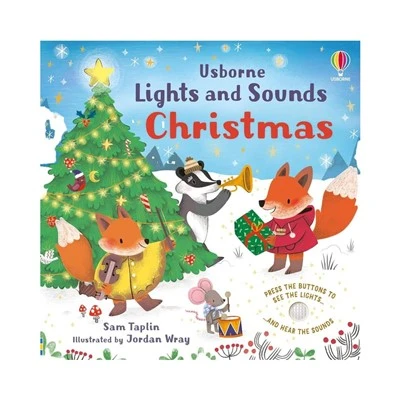
So when should you turn to specialty academic books, instead of other resources? Let’s say you’re doing a literature review for a thesis, and the journal articles are all conflicting on a specific point—like how climate change affected wine production in 18th-century Bordeaux. A specialty monograph might have overlooked archival letters from winemakers that clarify the confusion, something no journal article would include. Or if you’re a practicing engineer working on a very specific project—like designing a small wind turbine for mountain villages—you might need a technical manual that’s only published for a tiny group of renewable energy researchers, not a general engineering textbook. That’s when specialty books are indispensable.
Puzzle At the end of the day, specialty academic books are the backbone of specialized research. They’re the ones that let scholars dig into the tiny, specific questions that make big discoveries. They’re not flashy, they’re not on bestseller lists, and they’re not easy to find. But that’s exactly why they matter. If you’re a researcher, grad student, or professional who’s been struggling to track down that one niche book that could make your project click, we’re here to help. We don’t just ship books—we curate hard-to-find, hyper-specific academic resources for exactly your needs. If you’re ready to chat about what you’re looking for, reach out to our team to get started on sourcing the right specialty academic books for your work.
References
- Smith, J. (2021). The Role of Monographs in Niche Academic Research. Journal of Specialized Publishing, 18(2), 45-62.
- Lee, M. (2019). Navigating the Gap Between Digital Databases and Physical Specialty Books in Academic Research. Journal of Academic Librarianship, 45(4), 102158.
- Carter, R. (2020). Specialty Book Distribution: Meeting the Needs of Niche Academic Communities. Small Press Quarterly, 27(3), 112-127.
- O’Connor, S. (2018). Out-of-Print Monographs as Critical Research Tools. International Journal of Scholarly Communication, 9(1), 33-47.
NINGBO LOTO PACKAGE MANUFACTORY CO.,LTD
Ningbo Sentu Art and Crafts Co., Ltd. is one of the most professional specialty books manufacturers and suppliers in China. With abundant experience, we warmly welcome you to buy high quality specialty books made in China here from our factory. If you have any enquiry about cooperation, please feel free to email us.
Address: 3rd Floor, Momi Community, New Jinfeng, No.68, Chunchao Road, Yinzhou District, Ningbo City, Zhejiang Province, Ningbo, Zhejiang, China
E-mail: sales@nbprinting.com
WebSite: https://www.lotopuzzle.net/
