Hey there, if you’ve been driving through a downtown that’s got way more than just streetlights lighting the way lately—those poles with 5G antennas, CCTV cameras, air quality sensors, or even EV chargers bolted on? That’s a smart light pole, and let’s cut to the chase: I get asked all the time, “What’s the average cost for one of these bad boys?” As someone who’s been a smart light poles supplier for over a decade, I’m gonna break this down like I chat with my clients—no jargon, no vague numbers, just the real stuff you actually need to know before you start budgeting for your project. Smart Light Poles
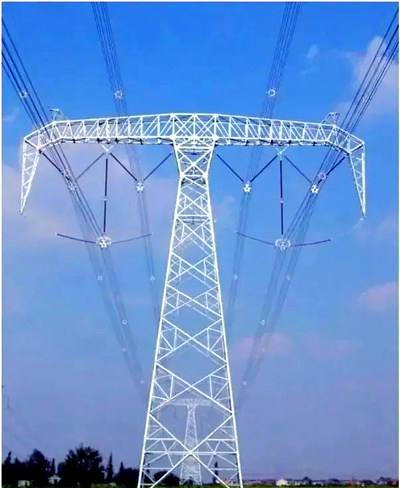
First off, let’s kill a myth right away: there’s no single “one size fits all” number. I’ve had cities hit me up for a basic pole just to replace old streetlights with a tiny 5G slot, and I’ve had commercial parks ask for a pole with four cameras, a CO2 sensor, a Wi-Fi hotspot, and an EV charger. Those two? They’re worlds apart in cost. But let’s get to the average. From what I’ve tallied up over the last few years, the typical cost for a standard, off-the-shelf smart light pole—nothing too fancy, just the core features most small to mid-sized projects need—lands somewhere between $2,800 and $4,500. Wait, I know that’s a range, but stick with me. That range accounts for the most common add-ons: a small 5G antenna mount, a basic motion sensor, and a single LED light head.
Now, let’s break down why that range exists, because that’s the part most suppliers skip. The base pole itself costs around $1,200 to $2,000, depending on its height. Poles for residential side streets are usually 25 to 30 feet tall—shorter means less material, so cheaper. Downtown poles might be 35 to 40 feet tall, and if they’re for highways, they can be 50+ feet. Taller poles mean more steel, more engineering to keep them stable in wind (super important if they’ve got heavy gear on top), so that base cost jumps. Also, we’re using galvanized steel almost exclusively now because it’s rust-proof and lasts 20+ years—way better than old painted steel that starts peeling in 5 years. That’s a big part of the base cost, no cutting corners there.
Then, the tech part. This is where the cost can swing a ton. If you just want a smart pole that replaces your old streetlight with an LED bulb and a tiny 5G slot for a future carrier, that’s on the lower end of the range—around $2,800. But add a few more features, and that number goes up. Let’s say you want a CCTV camera for parking lot security: a basic 2MP camera with night vision is like $300 to $500. Air quality sensors, which measure PM2.5, nitrogen oxide, or even pollen? Those run another $250 to $400. Wi-Fi hotspots for public use? Add $200 to $350. And if someone asks for an EV Level 2 charger bolted right to the pole? That’s a big one—those are $1,500 to $2,500, and we have to make sure the pole’s electrical load can handle it, so we might need to upgrade wiring, which adds another $300 or so.
Wait, there’s also installation and maintenance we shouldn’t sleep on. A lot of first-time buyers forget these costs, and that’s where budgets blow up. Installation alone is usually $800 to $1,500 per pole, depending on where it is. If it’s a flat residential street, that’s a simple dig and set—fast, cheap. If it’s a downtown sidewalk with utility lines already under the concrete, or a steep hillside? That’s way more work. Also, every smart pole needs a connection to the local power grid and sometimes a cellular network, so permits and utility hookups add another $200 to $600 per pole. As for ongoing maintenance, most of our clients pay a $50 to $100 monthly fee per pole for remote monitoring—we can check if a light’s out, a camera’s broken, or a sensor’s glitching before someone even calls us. That’s way cheaper than sending a technician out every time there’s a problem.
Now, let’s talk about bulk vs. small orders, because that makes a huge difference. If a city is ordering 100 poles for a new downtown district, we can drop the per-pole cost by 10 to 15%—we buy raw materials in bulk, and we set up production lines for the same design, so no custom work. But if a private business is ordering 5 poles for a small parking lot, we can’t do that, so each one is closer to the higher end of the range. That’s why I always tell clients: tell me how many you need, and what features, and I can give you a way more accurate number than a blog could.
Also, let’s address the “why is it more than a regular streetlight?” question I get all the time. A basic old streetlight is like $800 to $1,200, right? But smart poles aren’t just lights—they’re digital infrastructure. One pole can do the job of multiple separate pieces: the streetlight, the security camera, the Wi-Fi hotspot, even a charging station. For cities, that means less clutter on the sidewalk, lower maintenance costs over time, and extra data they can use for traffic management or air quality reports. For commercial parks, it means less separate utility bills for each device. Yeah, upfront is more, but it pays for itself in 5 to 7 years, depending on the features.
Wait, I should mention some outliers too, just to be honest. If someone wants a super high-end pole—say, for a major highway with 5G mmWave (the fast 5G that needs more antennas), multiple high-res CCTV cameras, a carbon monoxide sensor, and a bus stop info display? That can easily hit $8,000 to $12,000 per pole. Those are rare, though, most projects are way simpler. On the cheap side, if someone is looking for a temporary smart pole for an event or a construction site, they can rent one for $100 to $300 a month, but that’s not what we’re talking about for permanent installations.
Now, let’s get to the stuff that affects your total cost that most people don’t even think about. First, location: if you’re in a rural area, transport costs for the pole are way lower than in a big city. If you’re in a place with strict local building codes or environmental permits, that paperwork can add a couple hundred bucks per pole. Second, features compatibility: some carriers have specific 5G gear that needs to be mounted a certain way, or some cities want sensors that meet specific local standards, so we have to customize the pole, which adds cost. Third, electrical capacity: if you’re adding EV chargers or multiple devices, the pole needs a bigger electrical box and thicker wiring, so that’s another cost.
As a supplier, I’ve seen a lot of clients come in with a rough idea of cost, and end up surprised because they didn’t account for custom features or installation. That’s why our first chat is always: what’s the project for? Is it a street replacement, a commercial parking lot, a city park? How many poles do you need? Do you need EV chargers, cameras, or just basic tech? Once we have that, I can give you a precise number, not a range.
Wait, let’s talk about ROI for a sec, because that’s what sells a lot of these poles. For example, a city might spend $3,500 on a pole plus installation, and then earn revenue from the 5G carriers who rent space on the pole, or from ad space if we put digital displays on top. Those carriers usually pay $50 to $100 a month per pole, so within 3 to 7 years, they’ve made their money back, and then it’s profit for the next 15+ years. That’s why cities are jumping on these—they’re not just a cost, they’re an investment.
I’ve also had clients worry about durability. We build our poles to last 25+ years, and most of the tech is modular, so if a new sensor comes out in 10 years, you don’t have to replace the whole pole—just swap out the module. That keeps long-term costs way lower than if you had to replace the entire pole every 10 years like some old streetlight setups.
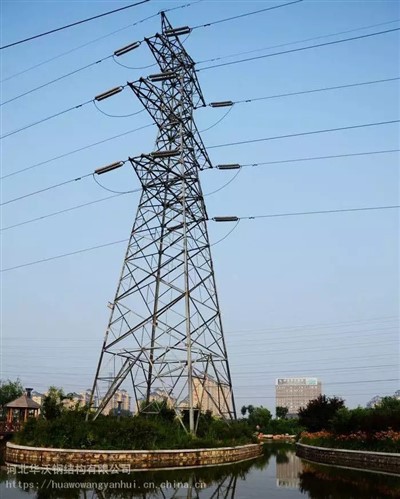
Now, let’s wrap this up, because I don’t want to ramble too long. The average cost of a standard, permanent smart light pole with core features is between $2,800 and $4,500, but that shifts based on height, tech add-ons, order quantity, and installation costs. If you’re working on a project—whether it’s a city downtown, a commercial campus, a residential development, or anything in between—hit us up to chat details. We’ll walk through your needs, break down costs clearly, and make sure you get a pole that fits your budget and your goals. Don’t guess at numbers when you can get a custom quote from someone who’s been doing this for years, no hidden fees, no fine print.
Tension Towers References
- National Association of City Transportation Officials. (2022). Smart Pole Infrastructure: Cost and Deployment Guide.
- International Municipal Signal Association. (2023). Smart Street Light Component Cost Analysis.
- Global Smart Lighting Market Report. (2023). Verified Market Research.
- U.S. Department of Energy. (2022). Energy and Cost Benefits of Smart LED Street Lighting.
Hebei Yifeng Steel Structure Co., Ltd.
As one of the most professional smart light poles manufacturers and suppliers in China, we offer a wide range of products with superior quality. Please feel free to buy cost-efficient smart light poles for sale here from our factory. Contact us for more details.
Address: Guangchuan Town Industrial Zone, Jing County, Hengshui City, Hebei Province
E-mail: hbyfgjg@163.com
WebSite: https://www.yf-powertowers.com/
